HydraFacial vs Laser Resurfacing in Edmonton: Which Fits You?
If you’re comparing HydraFacial vs laser resurfacing, the “best” option depends on your goal, timeline, and how much downtime you can realistically take. HydraFacial is ideal for an instant glow, smoother texture, and clearer pores with little to no recovery. Laser resurfacing is designed for deeper correction—think acne scars, sun damage, etched lines, and stubborn pigmentation—by stimulating longer-term skin renewal. If you’ve been searching “HydraFacial vs laser resurfacing near me” in Edmonton, Albany Cosmetic & Laser Centre (North Edmonton) can help you choose a plan that matches your skin type, concerns, and comfort level. For a detailed HydraFacial overview, see our HydraFacial in Edmonton page.
Quick take: Choose HydraFacial for fast, event-ready radiance with minimal downtime. Choose laser resurfacing for bigger changes in texture, scarring, and photoaging—when you can commit to aftercare and healing time.
Results You Can See: Before-and-After Photos in Edmonton
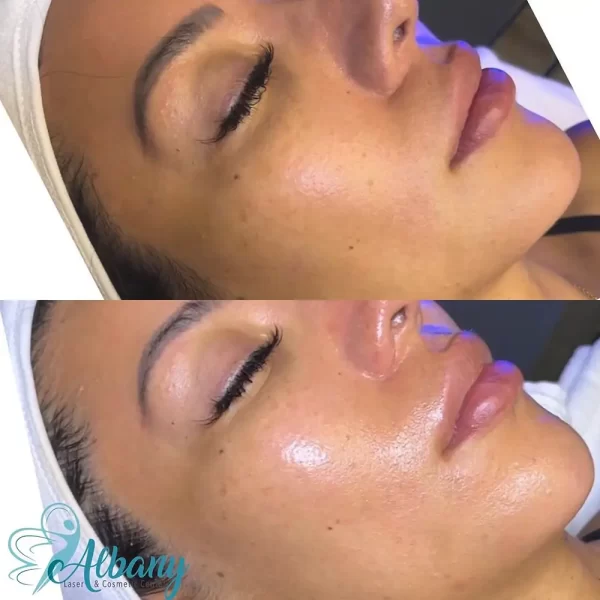
Results look different because these treatments work differently. With HydraFacial, most clients notice an immediate improvement in hydration, smoothness, and “brightness” the same day—making it popular before photos, weddings, or work events. With laser resurfacing, the most meaningful changes build over time as the skin repairs itself and remodels collagen, which is why laser before-and-after photos often show progressive improvement over weeks to months.
During your consultation, we can review real patient photos for concerns like pores and dullness (HydraFacial) versus acne scarring, wrinkles, and sun damage (laser). We also use consistent photo angles and lighting to track your progress accurately—so you’re not guessing whether your skin is improving.
HydraFacial vs Laser Resurfacing: Quick Treatment Summary
Here’s a practical overview of pricing, comfort, how the technology works, and what you should do to protect your results between sessions.
Cost & Pricing
HydraFacial is typically $199–$325 per session. Laser resurfacing is about $500–$2,500 per session depending on area and depth. You’ll receive a clear quote before treatment.
What To Expect
Expect 30–60 minutes. HydraFacial feels like a cool, wet polish with suction. Laser resurfacing is done with numbing; you’ll feel heat and pinpoint snaps, followed by redness.
Mechanism of Action
HydraFacial uses vortex suction to exfoliate, extract debris, and infuse hydrating antioxidants. Laser resurfacing creates controlled thermal micro‑injury to trigger collagen remodeling and new skin.
Benefits & Results
HydraFacial delivers instant glow, smoother texture, and cleaner pores. Laser resurfacing targets deeper wrinkles, sun damage, pigmentation, and acne scars with longer-lasting remodeling.
Post-Treatment Care
After HydraFacial: gentle skincare + SPF, avoid retinol/acids for 48 hours. After laser: strict sun avoidance, barrier ointment/creams, and staged return to actives as healing allows.
Side Effects & Downtime
HydraFacial has minimal downtime (possible mild pinkness for hours). Laser resurfacing downtime varies: redness, swelling, and peeling for several days, with pinkness lasting longer.
HydraFacial vs Laser Resurfacing Pricing in Edmonton by Area
Pricing varies based on treatment depth, skin condition, and whether you’re treating one area or multiple zones in the same visit. The table below provides practical starting points to help you compare options. For laser resurfacing pricing details and packages, see our fractional CO₂ laser resurfacing in Edmonton page.
table.responsive-pricing { width: 100%; border-collapse: collapse; } table.responsive-pricing th, table.responsive-pricing td { border: 1px solid #e6e6e6; padding: 12px; text-align: left; vertical-align: top; } table.responsive-pricing thead th { font-weight: 700; } @media (max-width: 640px) { table.responsive-pricing thead { display: none; } table.responsive-pricing, table.responsive-pricing tbody, table.responsive-pricing tr, table.responsive-pricing td { display: block; width: 100%; } table.responsive-pricing tr { border: 1px solid #e6e6e6; margin-bottom: 12px; } table.responsive-pricing td { border: none; border-bottom: 1px solid #f0f0f0; position: relative; padding-left: 52%; } table.responsive-pricing td::before { content: attr(data-label); position: absolute; left: 12px; width: 46%; white-space: nowrap; font-weight: 700; } table.responsive-pricing td:last-child { border-bottom: none; } }| Treatment area / option | Units | Estimated cost (CAD) |
|---|---|---|
| HydraFacial Signature (Full Face) | 1 session | $199 |
| HydraFacial Deluxe (Full Face) | 1 session | $300 |
| HydraFacial Platinum (Full Face) | 1 session | $325 |
| CO₂ Laser Resurfacing (Eyes) | 1 session | $500 |
| CO₂ Laser Resurfacing (Cheeks) | 1 session | $600 |
| CO₂ Laser Resurfacing (Hands) | 1 session | $500 |
| CO₂ Laser Resurfacing (Neck or Chest) | 1 session | $1,000 |
| CO₂ Laser Resurfacing (Full Face) | 1 session | $1,200 |
| CO₂ Laser Resurfacing (Scar Treatment, Small Area) | 1 session | $300 |
HydraFacial or Laser Resurfacing: How to Choose in Edmonton
Start with your primary goal: If your biggest complaint is dullness, dehydration, congested pores, or you want a smoother makeup finish fast, HydraFacial usually wins. If your goal is visible correction of acne scarring, etched lines, rough texture, or more advanced sun damage, laser resurfacing is typically the better match.
Then factor in downtime: HydraFacial fits easily into a lunch break and most clients return to normal activities right away. Laser resurfacing requires a healing window and disciplined aftercare. For an evidence-based overview of how laser resurfacing works and what it’s commonly used for, see Mayo Clinic’s laser resurfacing overview.
Consider your skin tone and pigment risk: Many skin tones can be treated safely when settings are selected appropriately, but some individuals are more prone to post-inflammatory hyperpigmentation and may need conservative laser settings, pre-treatment skincare, or an alternative approach.
Know that “laser resurfacing” is not one thing: Some clients want meaningful correction but can’t take CO₂-level downtime. In those cases, a fractional non-ablative option may be a better fit—learn more about Fraxel laser resurfacing in Edmonton and how it balances results with recovery time.
Local tip for “near me” searches: If you live or work in North Edmonton and want a plan you can maintain, many clients use HydraFacial for monthly conditioning and reserve laser resurfacing for seasonal “reset” treatments (often fall/winter when strict sun avoidance is easier).
Can You Combine HydraFacial and Laser Resurfacing Safely?
Yes—when they’re timed correctly. HydraFacial can be an excellent maintenance treatment because it supports hydration and surface clarity, while laser resurfacing focuses on deeper remodeling. The key is spacing: most people should avoid intense exfoliation too close to a laser session, and you should wait until the skin has fully healed before reintroducing facial treatments that involve suction, exfoliation, or active serums.
In practical terms, many plans look like this: HydraFacial to improve glow and congestion early on, then a laser session when your skin barrier is stable and your schedule allows downtime, followed by a return to HydraFacial later for upkeep once you’re cleared. Your clinician will customize the timing based on your skin sensitivity, treatment depth, and goals.
Frequently Asked Questions
Which is better for acne scars: HydraFacial or laser resurfacing?
For true acne scarring (indentations, texture changes, or deeper unevenness), laser resurfacing is usually more effective because it stimulates collagen remodeling below the surface. HydraFacial can improve pore congestion and surface smoothness, but it’s not a primary scar-correction treatment.
Is HydraFacial “strong enough” if I have pigmentation or sun damage?
HydraFacial can help your skin look clearer and brighter—especially when hydration and surface buildup are major issues. For more stubborn pigment and visible sun damage, laser resurfacing (or a staged plan that may include non-ablative options) is often a better route for noticeable correction.
How much downtime should I expect with laser resurfacing?
Downtime depends on laser type and intensity. Many clients experience redness, swelling, and peeling for several days after stronger resurfacing treatments, with lingering pinkness that can last longer. Your plan should match your calendar, comfort level, and aftercare commitment.
Can I do HydraFacial right before an event?
Often, yes. HydraFacial is popular before events because results are immediate and downtime is minimal. If your skin is very reactive or you’re trying a new booster for the first time, schedule your first session at least 1–2 weeks before a major event.
How many sessions will I need to see results?
HydraFacial results are typically visible after one visit, with best results building with monthly treatments. Laser resurfacing often delivers more significant improvement per session, but many concerns still benefit from a series or a staged approach depending on depth, scar type, and pigment patterns.
Who should avoid laser resurfacing (for now)?
Laser resurfacing may need to be postponed if you’re significantly tanned, have an active skin infection, have uncontrolled healing issues, or are unable to follow strict sun avoidance and aftercare. A thorough consult and medical history review is essential to reduce risks and choose the safest settings.
Comparing HydraFacial vs laser resurfacing is ultimately about selecting the right tool for your skin biology—not just picking the most popular treatment. At Albany Cosmetic & Laser Centre, our approach is consultation-led and safety-first: we assess your skin type, screen for pigment risk, review your skincare and medications, and match your treatment to your goals and downtime tolerance.
We also focus on measurable progress. That means standardized photos, clear timelines, and realistic expectations—especially for deeper concerns like scarring and photoaging that improve gradually. You’ll receive straightforward guidance on whether you’re better served by HydraFacial, fractional CO₂ resurfacing, a non-ablative fractional option, or a staged combination plan. We’re conveniently located in North Edmonton at 12914 167 Ave NW, making follow-ups and maintenance easy.
Request Your Appointment Today
Ready to stop guessing and start seeing a plan that fits your skin and schedule? Book a complimentary consultation at Albany Cosmetic & Laser Centre. We’ll recommend the right starting point—HydraFacial, laser resurfacing, or a combination—and provide transparent pricing, prep instructions, and aftercare guidance so you can move forward confidently.
Read our privacy policy here