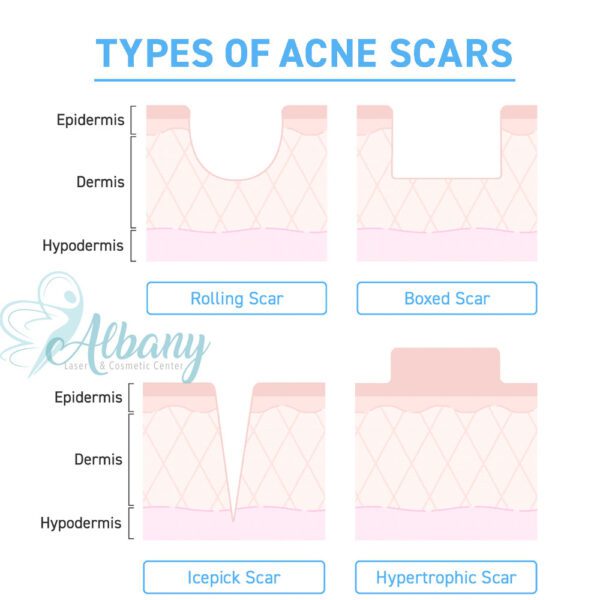
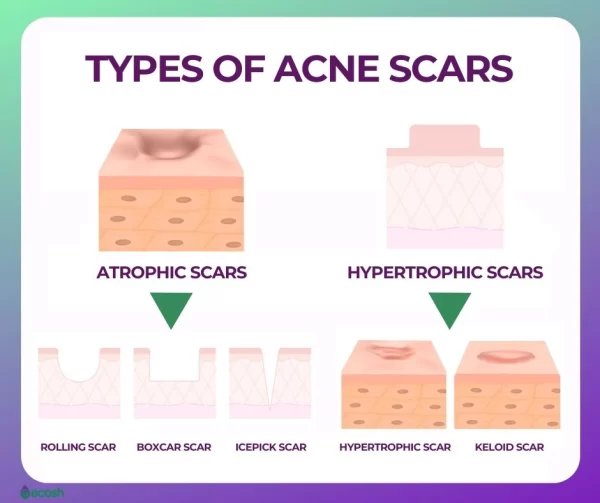
Rolling acne scars form as your skin heals from inflammatory acne. Unlike sharp, narrow “ice‑pick” scars or the box‑shaped depressions of boxcar scars, rolling scars create shallow pits with sloping edges that give the skin a wavy texture. They often arise on thicker skin, such as the lower cheeks and jawline, and can span four to five millimetres in width. While they aren’t dangerous, rolling scars may affect self‑confidence and become more noticeable as you age. Thankfully, a variety of professional treatments can smooth these indentations, stimulate collagen and restore an even complexion.
Rolling Scar Results: What Improves Most
Rolling scars tend to improve when the tethering is addressed and collagen remodeling smooths the surface. The most noticeable change is usually a reduction in “waviness” and less shadowing across the cheeks. Results build progressively over a series, and the goal is a smoother transition between scarred and non-scarred skin—not perfection. Many patients see the biggest payoff when rolling-scar treatment is combined with texture-focused therapies for pores and fine scarring.
Rolling Scars Explained: Identification, Causes, And Treatment Logic
Rolling scars form when acne inflammation triggers collagen loss and fibrous scar bands develop beneath the skin. These bands pull the surface down in multiple spots, creating a soft, undulating texture rather than a single crater. Because the issue is partly “below the surface,” treatments that only polish the top layer may improve skin quality but often won’t fully correct the tethering.
How To Identify Rolling Acne Scars
Feature
What you’ll notice
Texture pattern
Wavy, uneven surface
Edges
Soft, not sharply defined
Cause
Tethering under skin
Most visible in
Side lighting & movement
Why treatment is different: rolling scars often respond best to a combination approach—one step to address tethering and another to improve overall skin texture and collagen quality. This is why a proper assessment matters: many people have mixed scarring (rolling + boxcar + pigment), and each component needs the right tool to get meaningful improvement.