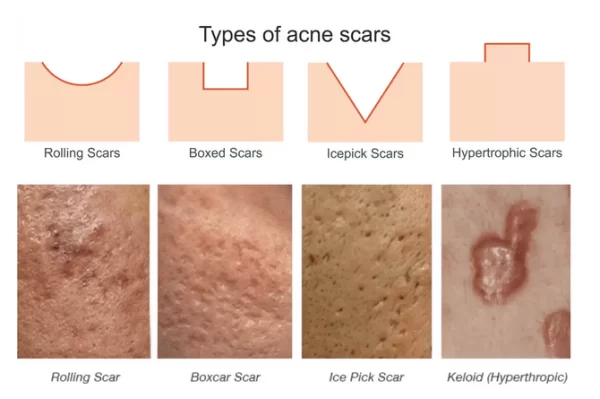
Ice pick acne scars are narrow, deep atrophic scars that look like tiny “pinholes” or punctures in the skin. Because they extend deeper than they appear on the surface, ice pick scars often don’t respond as well to broad resurfacing alone—treatment needs to be targeted and matched to depth. For a full overview of indented scar patterns, start with the acne scars treatment guide and then use this page to understand why ice pick scars require a more focal plan.
Who Is a Good Candidate for Ice Pick Scar Treatment?
Ideal candidates include individuals who is looking for acne scar treatment who:
Have deep, narrow pits caused by acne (ice pick scars).
Are in generally good health and do not have active infections or uncontrolled acne.
Understand that complete removal of the scar is unlikely but significant improvement is achievable.
Are not pregnant or breastfeeding.
Are willing to follow pre‑ and post‑treatment instructions and commit to a series of sessions.
People with bleeding disorders, keloid‑prone skin or certain medical conditions may require special precautions or alternative treatments. We’ll assess your medical history to ensure safety.
Ice Pick Scars Explained: Identification, Causes, And Treatment Logic
Ice pick scars form when acne inflammation damages collagen and leaves a deep, narrow tract as the skin heals. They’re usually smaller in diameter than boxcar scars but extend deeper into the skin. That depth is why surface-only treatments may have limited impact unless combined with targeted techniques.
How To Identify Ice Pick Scars
Feature
What you’ll notice
Shape
Tiny “pinpoint” openings
Depth
Deeper than they look
Edges
Steep, narrow walls
Lighting effect
Dots/shadows in side light
Why ice pick scars are different: because they’re deep and narrow, the “bottleneck” is often below the surface. That means a plan may prioritize focal techniques for the deepest pits and then layer in collagen remodeling to improve the surrounding texture. Many patients also have mixed scarring (ice pick + boxcar + rolling), so we treat the pattern—not just a single label.