Rolling acne scars are a type of atrophic (indented) scarring that create a wavy, uneven skin texture—especially noticeable in side lighting. Unlike boxcar or ice pick scars, rolling scars are often caused by fibrous bands under the skin that “tether” the surface downward, creating shadowing and a rippled look. For the broader framework of scar types, see the acne scar overview and use this page to understand why rolling scars usually need a different strategy than resurfacing alone.
Atrophic Scars Explained: Types, Causes, And Treatment Logic
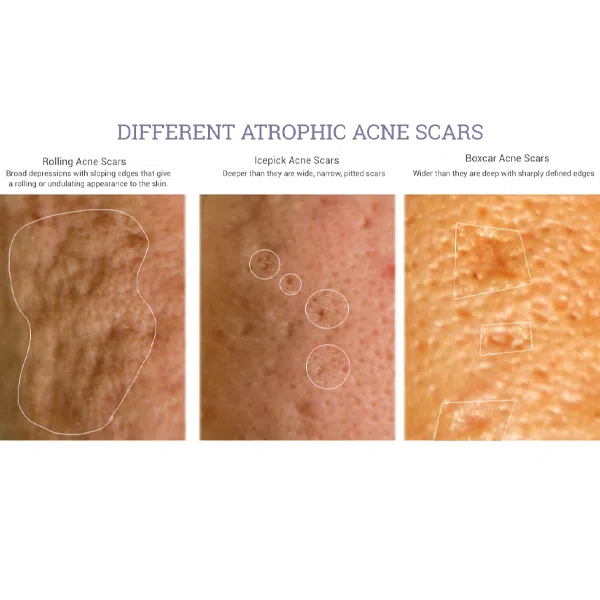
Atrophic scars form when acne inflammation damages collagen and the skin heals with a net deficit—creating an indentation. The three classic subtypes are:
Types Of Atrophic Acne Scars
Subtype
How it looks
Ice pick
Narrow, deep “pinpoint” pits
Boxcar
Wider dents with sharper edges
Rolling
Wavy texture from tethering
Why subtype matters: ice pick scars are often too narrow/deep for broad resurfacing alone, boxcar scars may respond well to resurfacing and collagen stimulation, and rolling scars commonly require addressing the fibrous “anchors” beneath the skin that pull tissue downward. Many patients have a mixed pattern, so a combination plan is common.